
This post contains affiliate links. Please see our disclosure policy.
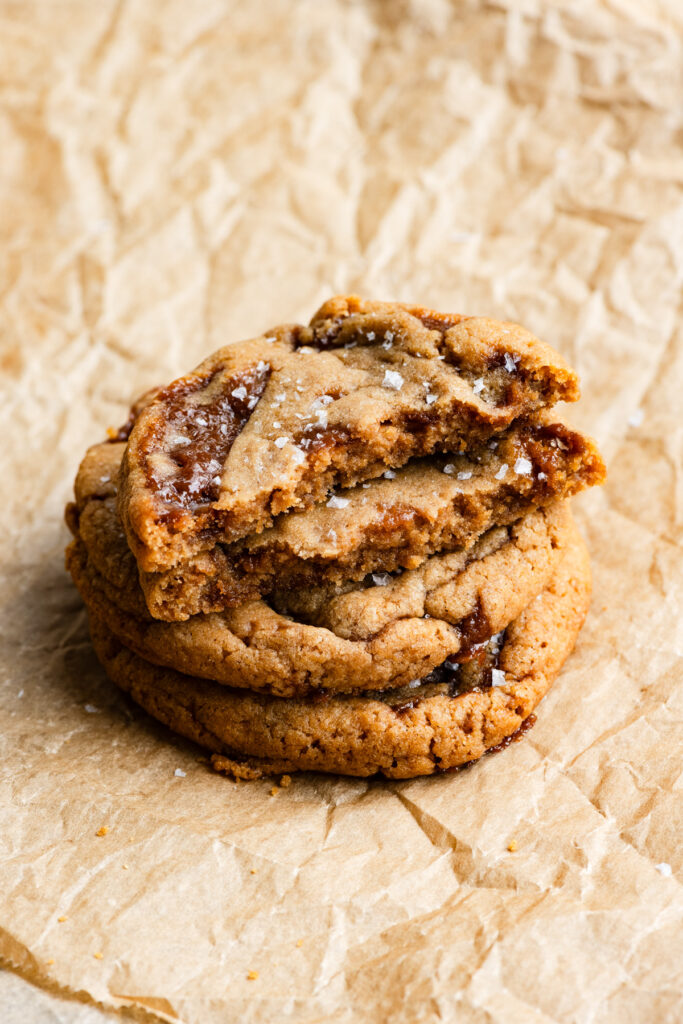
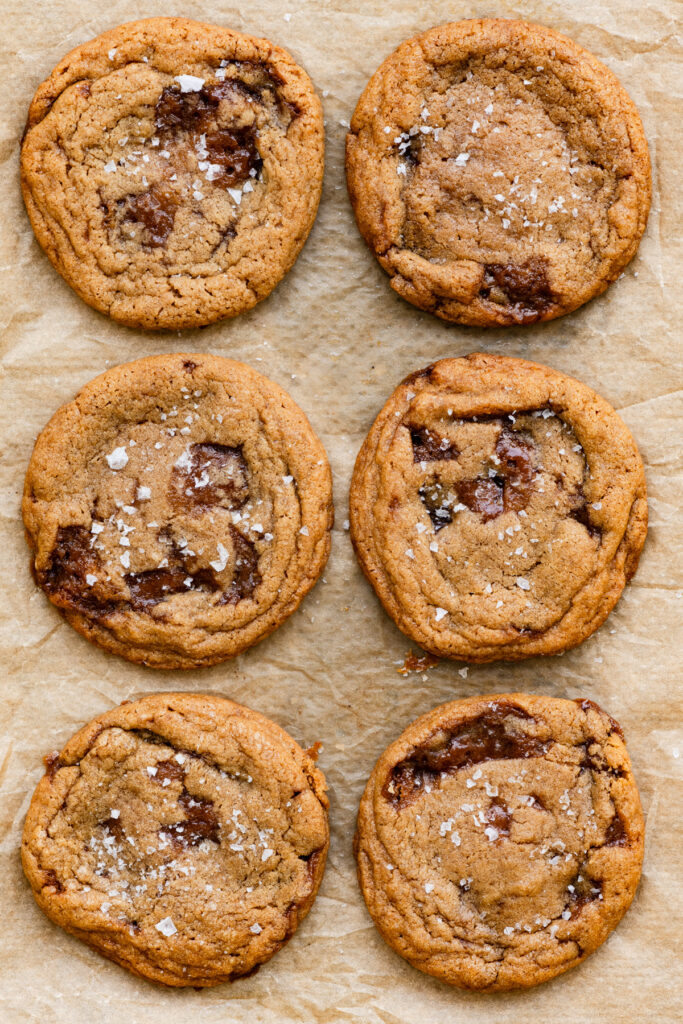
These brown sugar toffee cookies are made with European-style butter, dark brown sugar, and chunks of homemade toffee. They bake up with soft, chewy centers, lightly crisp edges, and pockets of melted toffee throughout. Rich, buttery, and indulgent, these bakery-style cookies deserve a spot right beside your favorite chocolate chip cookies.

Key Ingredients & Test Notes
- Unsalted Butter, 82% butterfat: Both the homemade toffee and cookies use unsalted butter, the cookie dough is formulated with European-style butter for a richer flavor and tender texture.
- Brown Sugar: Dark brown sugar with a higher molasses content adds deep caramel flavor to both the toffee bits and cookies.
- All Purpose Flour: This recipe uses flour with about 11% protein for the right balance of structure and softness.
- Homemade Toffee Bits: Made with just butter, brown sugar, and salt, the homemade toffee adds extra rich, butterscotch notes to the cookie dough.
- Test Note: Store bought toffee bits may be drier and result in a different overall texture.
- Cornstarch: A small amount of cornstarch helps create a softer, thicker cookie with a slightly crisp edge.
- Flaky Sea Salt: Sprinkled on top after baking, it enhances the caramel notes and balances the sweetness of the toffee.
How to Make Homemade Toffee Bits
Making homemade toffee for cookies is essentially candy-making, it’s simple but demands your full attention for about 10 minutes. Be careful pouring the cooked mixture as the sugar will be very HOT!
- First, make sure to vigorously stir the melted butter and sugar together at the start to fully combine them.
- Next, whisk steadily and continuously as the mixture cooks until it reaches the hard crack stage on a candy thermometer, about 295°F (146°C).

- Once it reaches temperature, carefully pour the hot toffee onto a Silpat-lined baking sheet and let it cool completely.
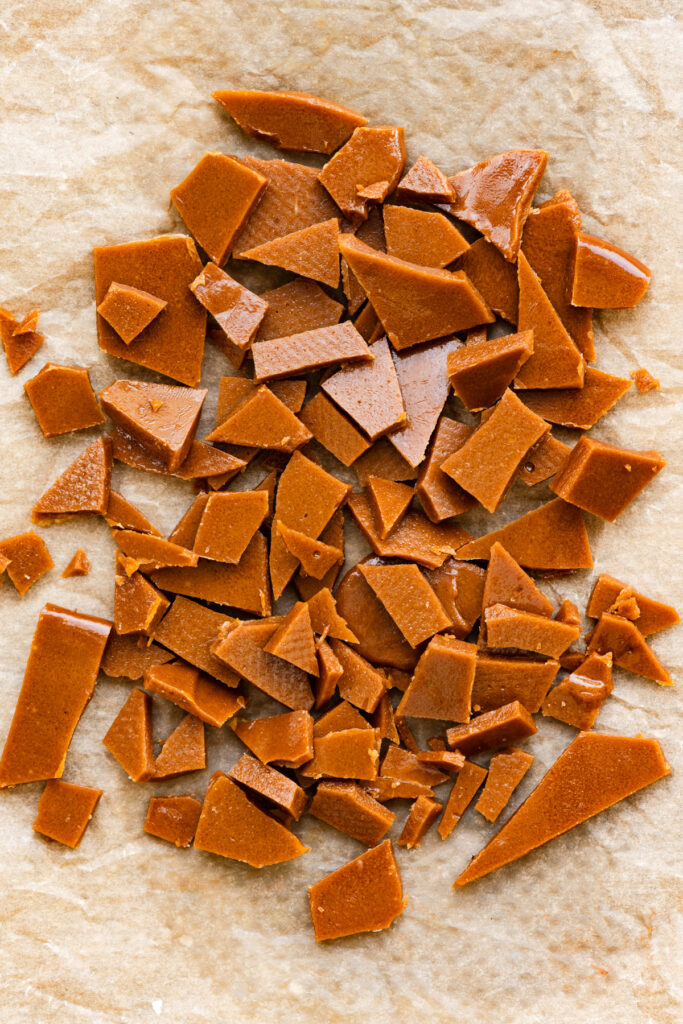
- Chop or break the cooled toffee into small bits before folding them into the cookie dough.
How to Make Toffee Cookies
- Cream butter and sugars. Beat together the soft butter with the brown sugar and granulated sugar until lighter in color and somewhat fluffy (2-3 minutes).
- Mix in eggs and vanilla. Add the egg and egg yolk, mixing until well combined. Followed by the vanilla.
- Add the dry ingredients. Whisk together the dry ingredients in a medium bowl. Then, mix into the wet mixture one half at a time until just combined.
- Toffee Bits. Fold the toffee bits into the cookie dough to evenly distribute.
- Chill the dough. Pre-scoop the dough into even sized portions. Place in an airtight container and chill for 3 hours or even better overnight. I’ve also frozen them for an hour before baking when I needed cookies immediately!
- Bake. Place dough balls on lined baking sheets and bake 14-15 minutes at 350F (180C) until puffed in the center and golden on the edges. Sprinkle warm cookies with flaky sea salt.
Toffee Cookie Testing
I tested this cookie recipe several times, making small tweaks until I landed on the perfect texture, soft and chewy with lightly crisp edges and just enough melted toffee bits. To start, I experimented with the type of flour, the amount of sugar, and whether to include cornstarch. Then, I baked each version after both a three-hour chill and an overnight chill to compare results. Finally, I tested two shaping methods: scooping the dough into round balls and packing it into tall cylinders to see how each affected spreading and the final cookie shape.
- #1: My first batch had slightly more butter and granulated sugar, plus a whole lot of toffee folded in. Results: Flat crispy cookies with too much toffee compared to bites of plain cookie.
- #2: The second batch, I decreased the butter amount along with the granulated sugar and amount of toffee chips. Brown sugar was increased to compensate for less granulated sugar. Results: Much less spread on the cookie, more tender plain cookie, and better balance of toffee.
- #3: Batch three introduced the addition of cornstarch. Just 2-teaspoons mixed into the flour. Results: Less spread on the cookie and a tender, melt in your mouth texture. (my favorite)
- #4: This test I kept everything the same, but swapped half of the softer wheat all purpose flour (11% protein) for bread flour with a bit more protein (12%). Results: Thicker cookie, less chew, tender center.
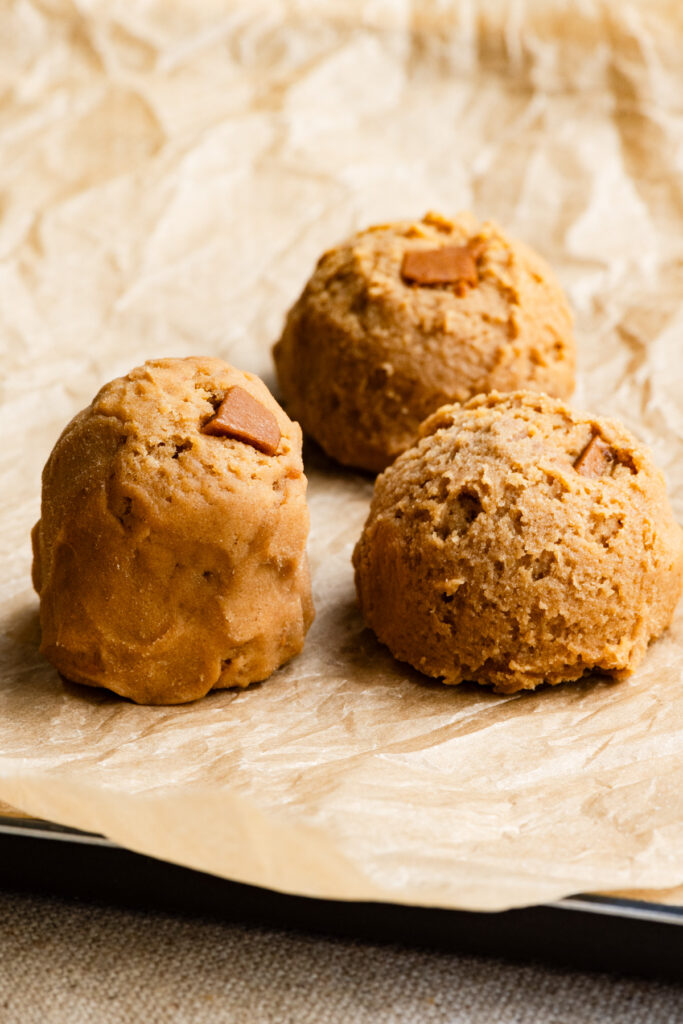
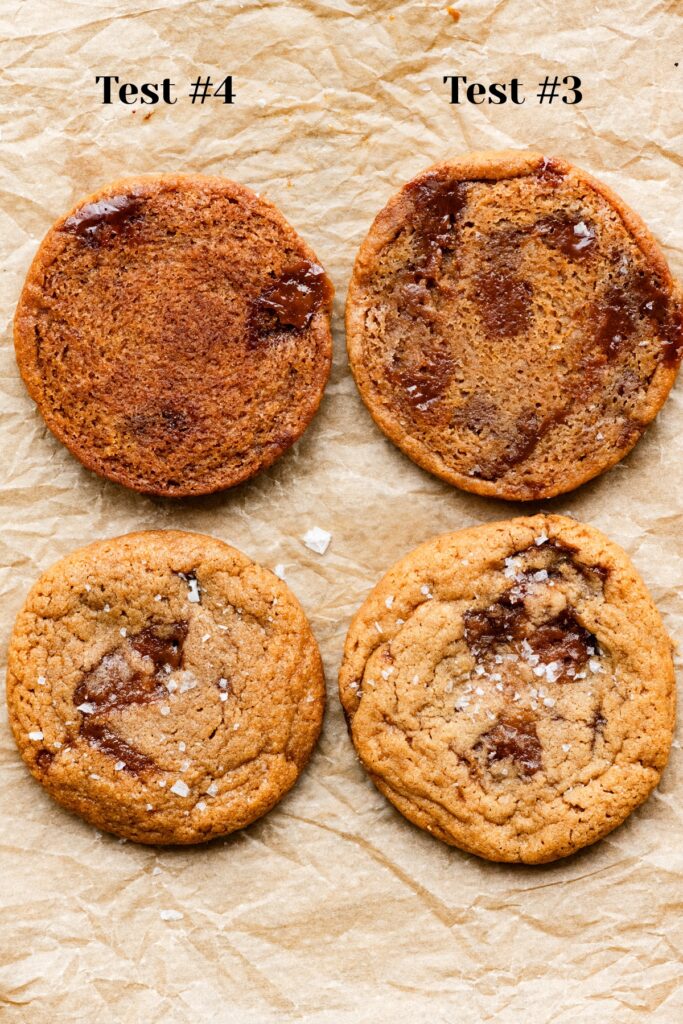
In conclusion, I prefer cookie test #3 for its slightly chewy yet tender texture, achieved with lower-protein flour. Packing the dough into a cylinder created a more wrinkled surface, but it baked the same as dough shaped with a cookie scoop. Chilling the dough overnight reduced spread, as the flour had more time to absorb moisture. Chunks of toffee along the edges caused a few irregular shapes, which I easily fixed with a quick “cookie scoot.”
Jenn’s Cookie Tips
- Make homemade toffee bits. This extra step creates more flavorful toffee than store bought with soft pockets of melted toffee in the baked cookies. The ratio of flour, sugar, and butter are all balanced for the added moisture released from the homemade toffee.
- Measure out 1 cup of the chopped toffee bits for the cookie dough. You will have some leftover toffee. Place it in a plastic bag in the fridge for another recipe.
- Properly cream the butter and sugar. This may take 1-2 minutes for the mixture to form a paste and all the sugar granules to be incorporated evenly into the butter. With the higher amount of brown sugar, it won’t become light and fluffy like creaming just butter and granulated sugar.
- Chilling the cookie dough. It makes a big difference in both texture and spread. The toffee pieces add extra sugar, which can cause the cookies to spread more as they bake. A good chill gives the flour time to fully hydrate, helping the dough hold its shape in the oven. It also creates that perfect chewy texture we’re after.
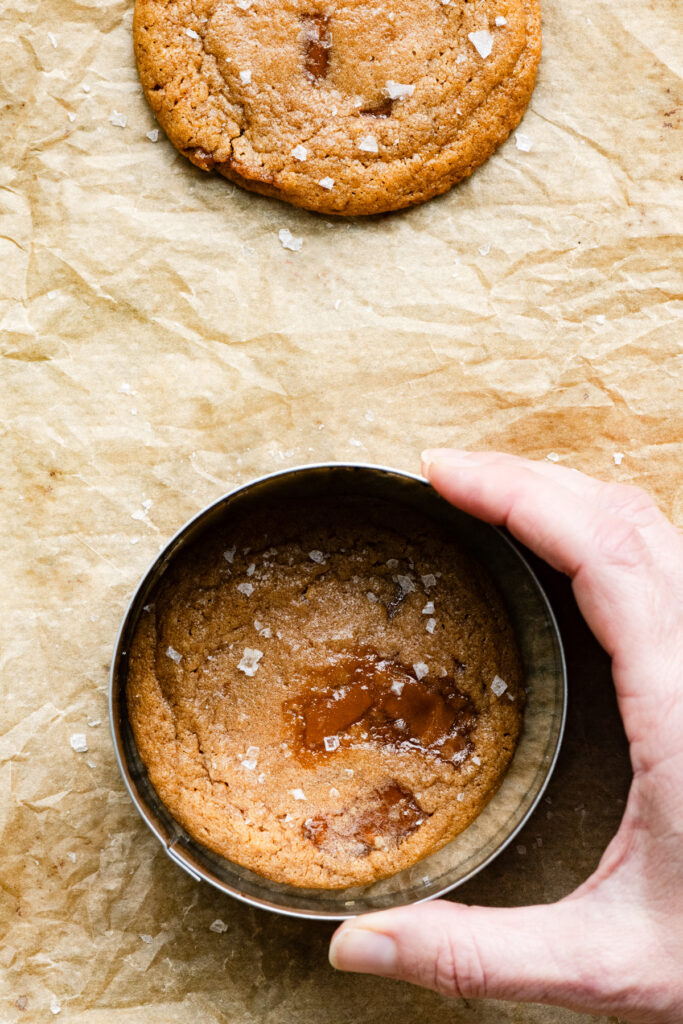
- Cookie scoot if needed! If any cookies come out of the oven with slightly irregular edges, it’s an easy fix. Just place a round cookie cutter or glass slightly larger than the cookie over it, then gently move your hand in a circular motion to nudge it back into a perfect round shape.
Storage & Leftovers
- Cookie Dough:
- Chill: Refrigerate cookie dough for up to 3 days before baking.
- Freeze: Toffee cookie dough can be scooped into balls and placed in airtight container for up to 3 months. Cookies baked from frozen dough will need an additional 1-2 minutes baking time.
- Baked Cookies:
- Room Temp: Baked cookies are best stored at room temperature in an airtight container for up to one week.
- Toffee Bits:
- Store leftover toffee bits in an airtight container in the freezer for up to 3 months.
★★★★★ Please leave a star rating and review below if you make this recipe! THANK YOU!!
Brown Sugar Toffee Cookies

Equipment
- small heavy bottom sauce pan
- large baking tray
Recipe Video
Ingredients
Homemade Toffee Bits
- 113 grams (½ cup) unsalted butter, American or European style
- 220 grams (1 cup) dark brown sugar
- 1 teaspoon fine sea salt
Toffee Cookies
- 227 grams (1 cup) unsalted butter European-style, 82% butterfat, softened
- 265 grams (1 ¼ cups) dark brown sugar
- 50 grams (¼ cup) granulated sugar
- 50 grams (1 large) egg
- 20 grams (1 large) egg yolk
- 1 tablespoon vanilla bean paste or pure vanilla extract
- 333 grams (2 ⅔ cups) all purpose flour, 11% protein
- 2 teaspoons cornstarch
- ¾ teaspoon fine sea salt
- ½ teaspoon baking soda
- ½ teaspoon baking powder
- 100 grams (1 cup) homemade toffee bits
Topping
- flaky sea salt
Instructions
Homemade Toffee Bits
- Line a baking sheet with a silicone baking mat or parchment paper and set aside. DO NOT use wax paper, the high heat from the toffee can melt it!
- Place a small heavy-bottom saucepan on medium heat. Add in the butter, brown sugar, and salt. Stir as the butter melts.113 grams unsalted butter, 220 grams dark brown sugar, 1 teaspoon fine sea salt
- Once the butter is melted, whisk vigorously to combine. (vigorously is important at first! stir to slow and it will separate) Continue whisking constantly as the mixture cooks, to prevent burning. It should go from a dark brown color to a lighter caramel color.
- If the mixture does separates while it's cooking, remove saucepan from the heat and stir vigorously again until it comes back together. Return pan to the heat and continue cooking.
- Cook until it begins to resemble peanut butter 7-9 minutes, an instant read thermometer should read to 295°F (146°C) for "hard crack" candy.
- Immediately remove from heat and pour the toffee onto the prepared baking pan. It should be easy to pour but have a thick texture. Careful when pouring as the mixture will be very hot. Spread the toffee into an even layer with a silicone spatula. The toffee will start to firm as soon as it hits the tray.
- Let cook for about 20 minutes, or until it reaches room temperature. It should be firm enough to pick up into one big sheet of toffee.
- Chop the toffee into small chunks with a large knife, just like you would chocolate chips and set aside.
- Measure out 100 grams (1 cup) of the chopped toffee bits for the cookie dough. Store the leftovers in a plastic bag in the fridge or freezer for another recipe.
Toffee Cookie
- In a medium bowl, whisk together the flour, baking soda, baking powder, cornstarch, and salt. Set aside.333 grams all purpose flour, 2 teaspoons cornstarch, ¾ teaspoon fine sea salt, ½ teaspoon baking soda, ½ teaspoon baking powder
- Place butter, brown sugar, and granulated sugar in the bowl of a stand mixer or large bowl with electric hand mixer. Cream together on medium-high speed for about 1-2 minutes until the butter is completely incorporated into a sugar paste.227 grams unsalted butter European-style, 265 grams dark brown sugar, 50 grams granulated sugar
- On medium speed, beat in the egg and egg yolk until well combined. Followed by the vanilla.1 tablespoon vanilla bean paste or pure vanilla extract, 50 grams egg, 20 grams egg yolk
- Mix in the flour mixture, half at a time until just combined.
- Add the toffee bits and mix on low for a couple spins, just to mix them in. Or use a sturdy silicone spatula to fold them in by hand and avoid overworking the cookies dough.100 grams homemade toffee bits
- Pre-scoop the cookie dough using a large cookie scoop. Place the portions on a parchment paper lined tray or air tight container. Cover and refrigerate for a minimum of 3 hours or overnight.
- Preheat oven to 350℉ (180℃). Line a cookie sheet with parchment paper.
- Place cookie dough balls about 3-inches apart of the baking sheet. I bake four large cookies at a time.
- Place tray on middle oven rack and bake for 14-15 minutes. The centers should look puffy and the edges a golden brown.
- Transfer cookie sheet to a wire cooling rack and sprinkle with flaky sea salt. If the cookies are slightly misshapen, use a large round cookie cutter or glass to "scoot" around the cookie in a circular motion to re-shape them into a circle. (*see post for details)flaky sea salt
- Leave cookies on the hot pan for about 10 minutes to finish setting up. Then transfer directly onto a wire rack to cool completely.
Notes
- Ingredients Used:
- Flour: Gold Medal All Purpose 10.5-11% protein
- Butter: President Unsalted Butter, 82% butterfat
- Toffee: This recipe was tested with homemade toffee, which melts into pools of toffee in the cookies.
- Substitutions:
- Gold Medal Flour or a soft wheat flour with 11% protein will yield a tender cookie with a slight spread. King Arthur Flour, a strong wheat flour with 11.7% protein will yield a slightly thicker cookie with less spread.
- The ratio of flour to butter is adjusted for the rich European-style butter used. Swapping for American style butter with only 80% butterfat will result in a less tender cookie.
- Oven: This recipe was written for a conventional oven (top and bottom heat). For convection fan ovens, reduce the temperature by 25 degrees and begin checking for doneness 75% of the way through baking.
Weigh your flour: The measurement I use: 1 cup of flour equals 125 grams. This amount can change based on a different baker’s recipe or using a conversion tool. The weight listed in the recipe is how it was tested and should be used for accuracy. Different brands of flour are made with soft or hard wheat and have varying levels of protein, ranging from low to high. This can change the final result of a baked good, giving different outcomes on the same recipe. I list the level of protein in the ingredients, the brand of flour tested with and a link to My Baking Ingredients for additional details. When choosing a flour, look at the protein level on the back of the bag and consult the recommended amount for the recipe.
