
This post contains affiliate links. Please see our disclosure policy.

For me, pound cake needs to taste like it came from my mother’s kitchen. Made with buttermilk, moist yet dense, with a golden outer crust. The kind of cake you can slice, hold in your hand, and eat on the go. This classic pound cake recipe is my ideal version of the one I grew up eating. It’s perfect plain or paired with fruit compotes, a scoop of ice cream, or a lemon glaze.
My version riffs on the traditional pound cake recipe ratio of equal parts flour, butter, eggs, and sugar, with tangy buttermilk. Plus a touch of baking soda to lighten the crumb and enhance the final texture. An easy loaf cake that you can leave on the counter and nibble on throughout the week.
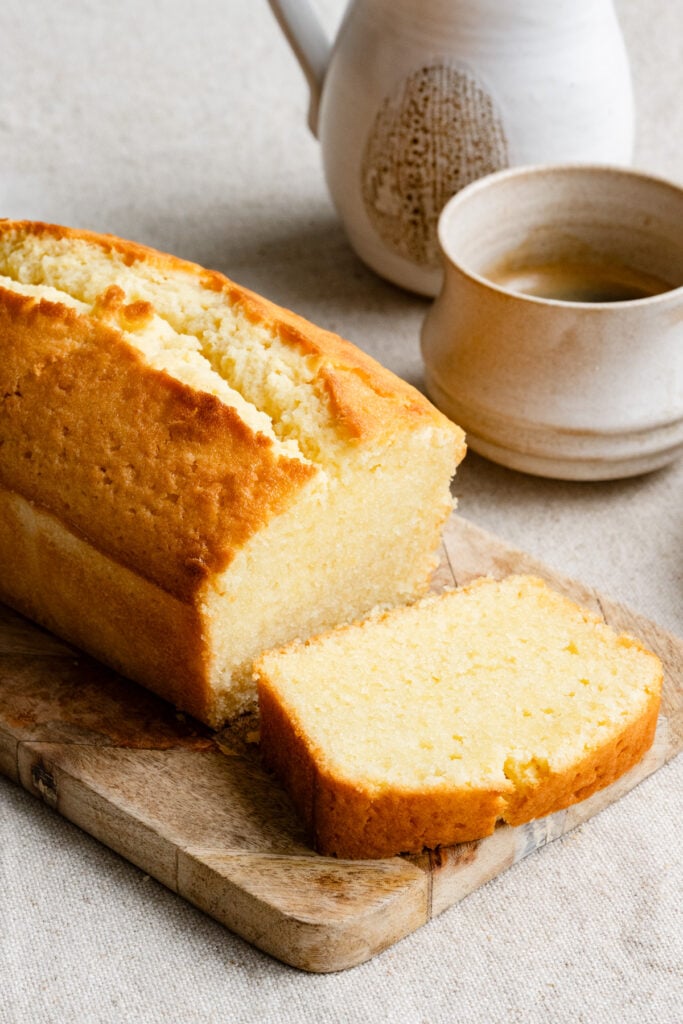
Baking in a loaf pan instead of a large bundt pan makes this cake the perfect travel size. I can wrap up a loaf for friends and neighbors without needing a cake box. For another delicious and beginner baker friendly loaf option try my Vanilla Orange Loaf Cake, Brown Sugar Banana Bread, or the reader favorite Chocolate Banana Oatmeal Bread.
Simple Ingredients for a Rich, Buttery Pound Cake
- Cake Flour: A lower protein of 8-9% gives the cake a more tender crumb, as opposed to all purpose flour with protein of 10.5-11.7%.
- Note: I use Swans Down Cake Flour or Farine T45 in France.
- Unsalted Butter: European style butter with 82% butterfat delivers a rich buttery experience. My Southern grandmother would use lard in her pound cake, and though it was delicious, I prefer the taste of an all butter pound cake instead.
- Note: It can be swapped equally for American style butter at 80% butterfat, but if you’re feeling frisky go for the European butter.
- Granulated Sugar: For a superfine texture I process my granulated sugar in a food processor for a few spins, making it easier to cream into the butter.
- Note: For this cake I’m adding a bit of lemon zest, which can be swapped for orange zest or omitted all together.
- Large Eggs: While testing this recipe I decided to swap one of the whole eggs for two egg yolks. The result was a slightly more compact and luscious crumb.
- Note: I use a scale to weigh my eggs as I crack them, since the total weight can vary depending on size. As a general rule of thumb, each whole egg should weigh about 50 grams without the shell, roughly 30 grams for the white and 20 grams for the yolk.
- Buttermilk: Gives a bit of tanginess and a creamier mouth feel to the cake. Buttermilk also helps the crumb retain moisture for a tender slice days after baking.
- Note: Swap evenly with either sour cream or Greek yogurt for a denser crumb. Or for an even richer elevated option, swap half for crème fraîche.
- Baking Powder: Classic pound cake skips chemical leaveners and lets the eggs do all the heavy lifting. I, however, like to add a bit of baking powder to this slightly acidic batter to give the crumb a little breathing room. This keeps the cake rich and buttery without crossing into brick territory.
How to Make a Classic Loaf Pound Cake Step-by-Step
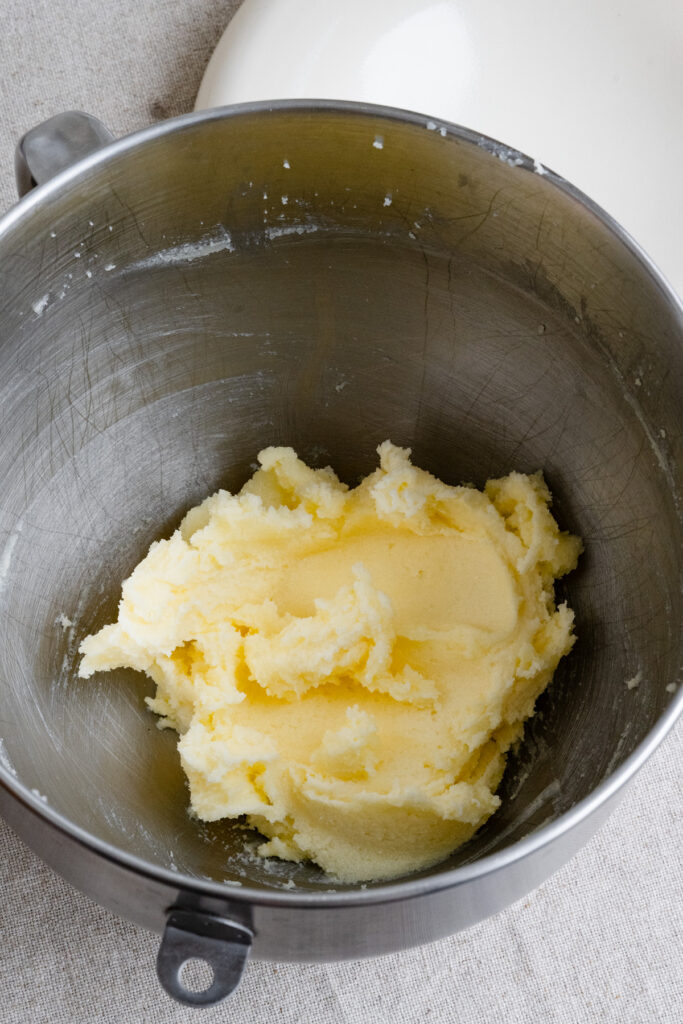
- Place softened butter and sugar in the bowl of a stand mixer and beat until light and fluffy. This should take about 5 minutes on medium speed with the paddle attachment. I use the number 6 speed on my stand mixer.
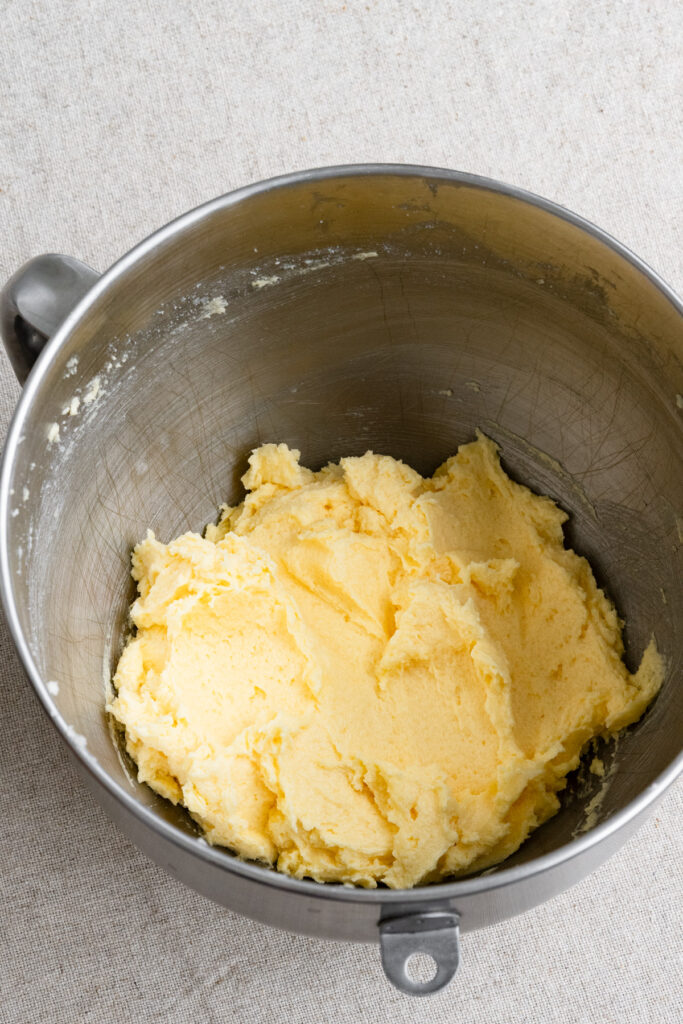
- Mix in the whole eggs and egg yolks one at a time. Scraping the bottom and sides of the bowl after adding each egg to make sure everything is well incorporated. The texture should be fluffy and light yellow.
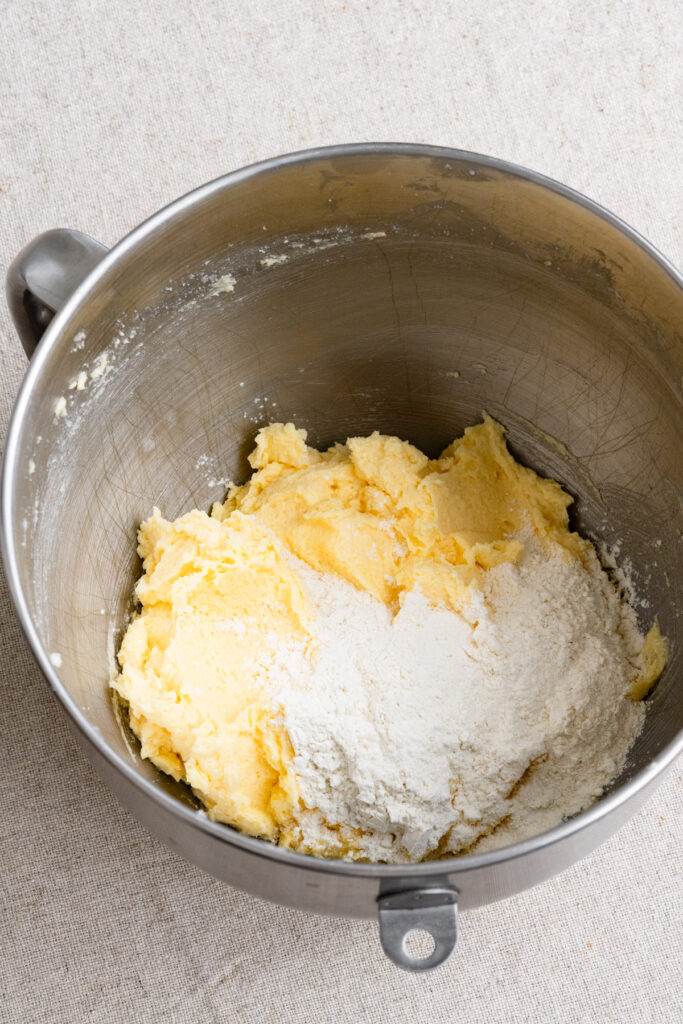
- Whisk the sifted flour, baking powder, and salt together in a medium bowl. Then, add one third of the dry ingredients to the mixing bowl with the egg and butter mixture.
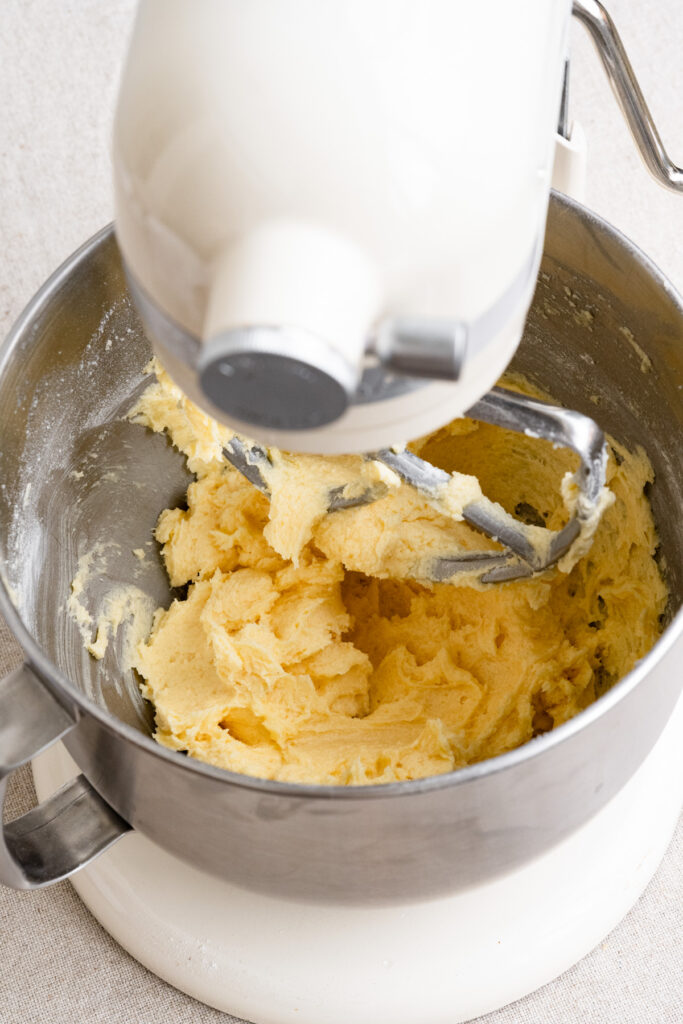
- Mix on medium-low speed until combined. The mixture will start to thicken slightly.
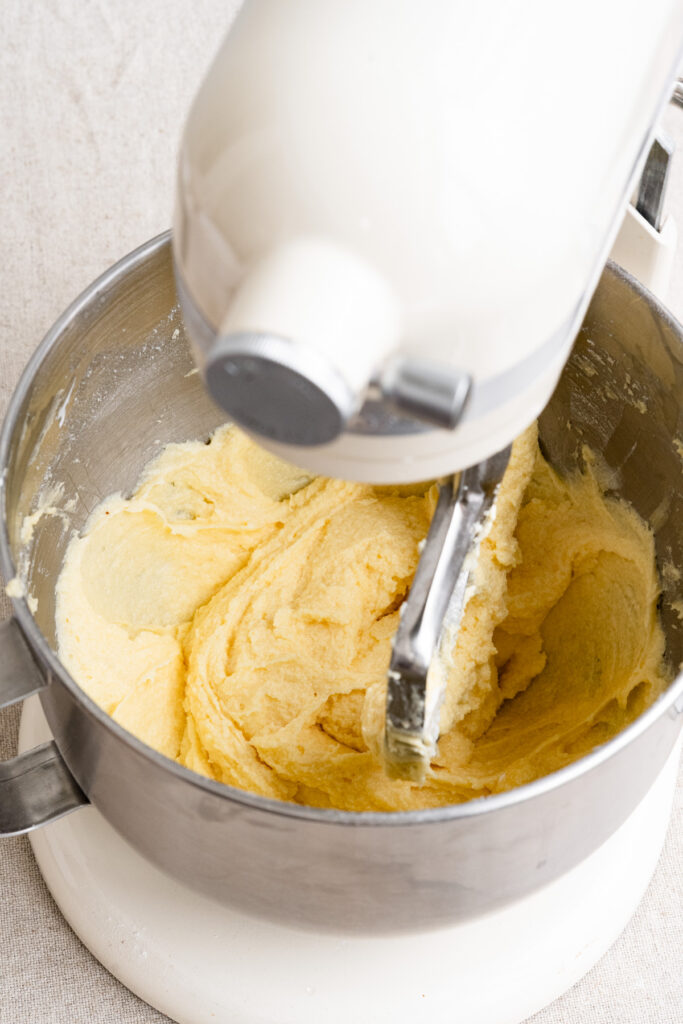
- Mix in half of the buttermilk for a thinner yellow batter. It will look a bit curdled, but that’s ok!
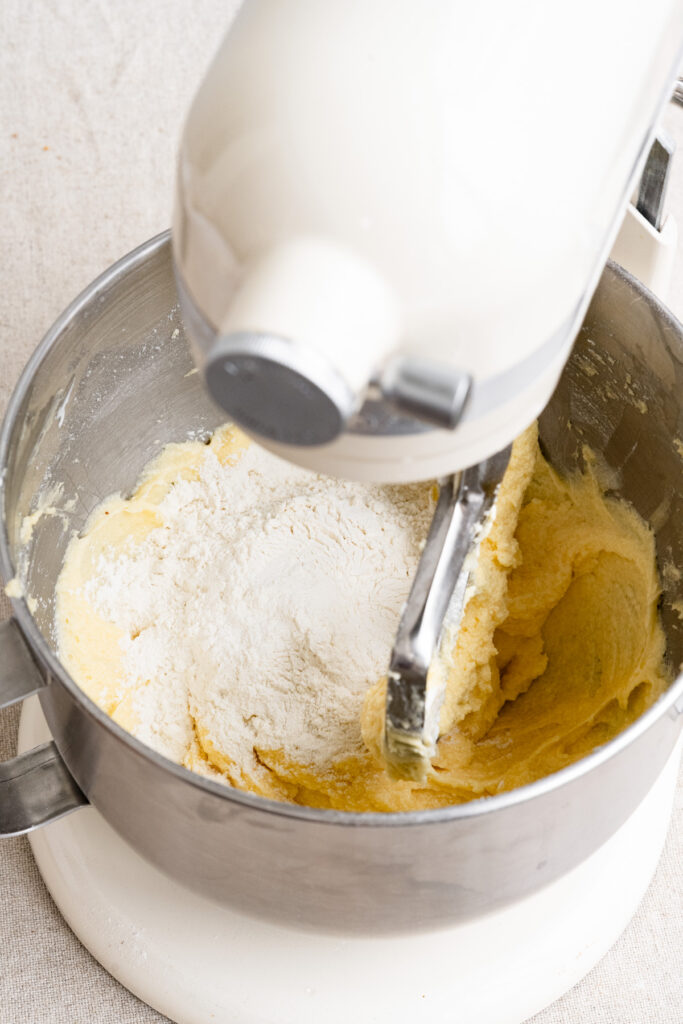
- Add in another third of the flour mixture.
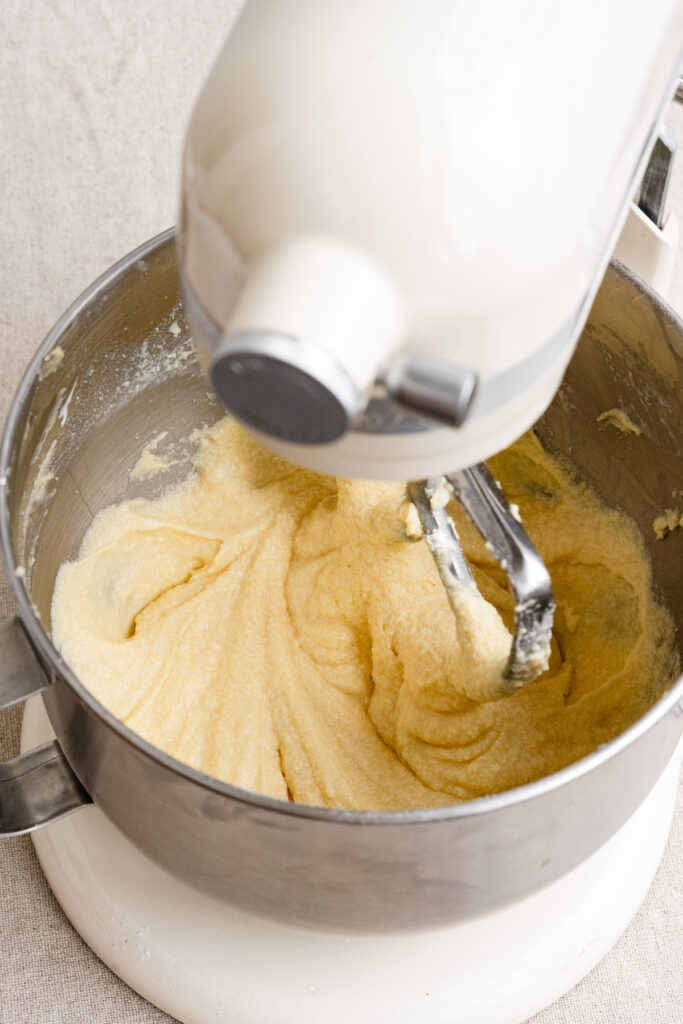
- Next, blend in the second half of the buttermilk and vanilla. The batter will look a little curdled again, but we’ll fix that with the final addition of flour.
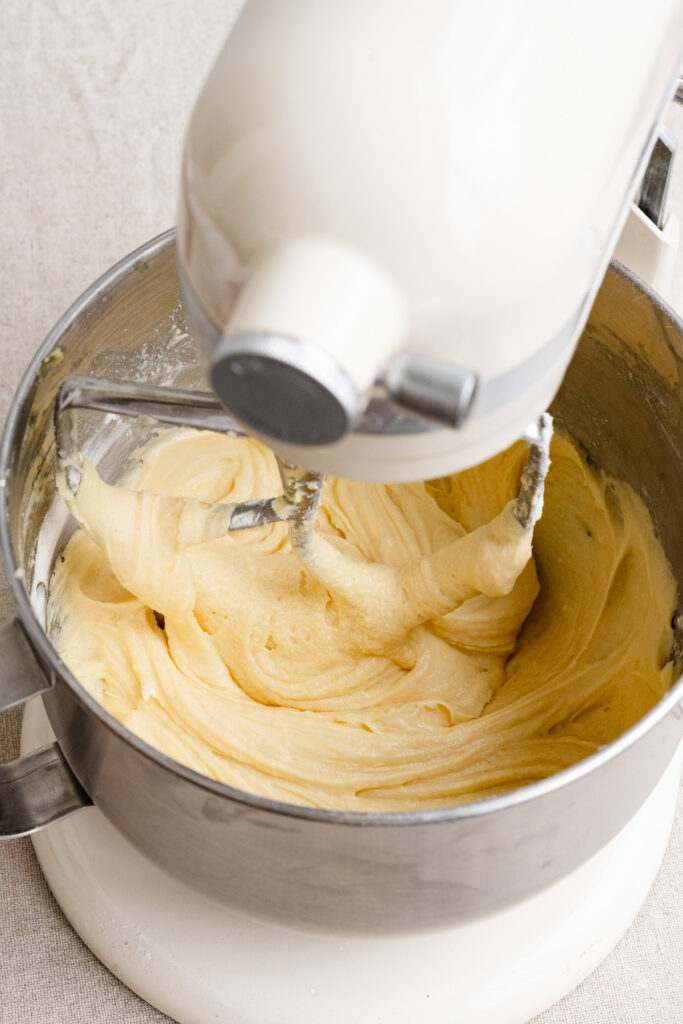
- Add in the last third of the flour and mix on low speed just enough to combine.
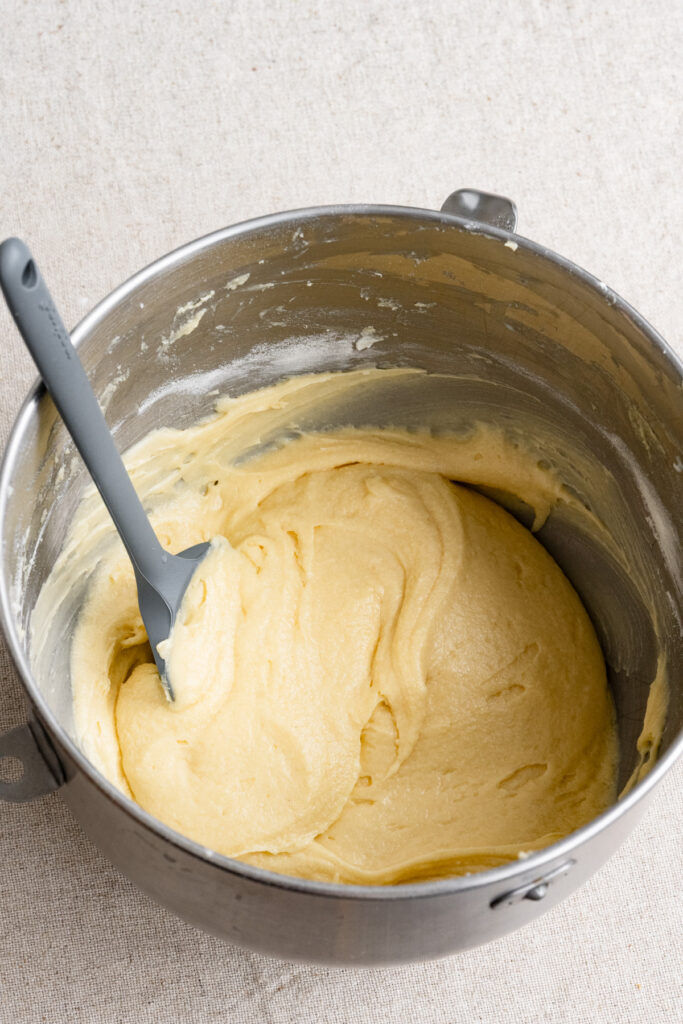
- Remove bowl from the mixer. Take a spatula and scrape the bottom and sides of the bowl to grab anything stuck to the bottom and sides of the bowl.
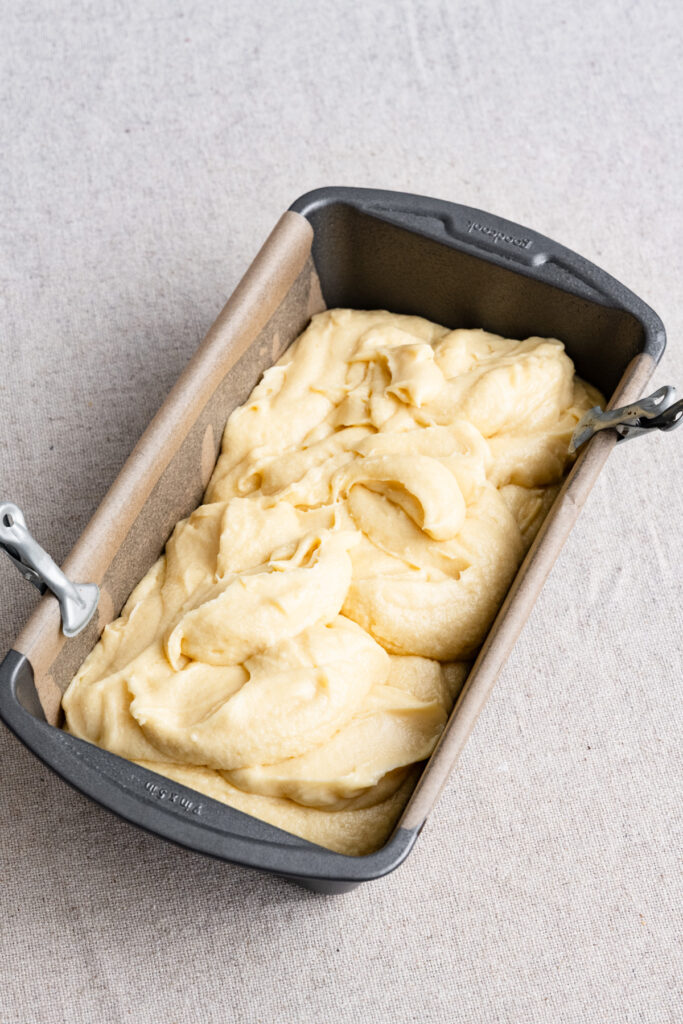
- Transfer the thick silky yellow cake batter to a 9×5-inch parchment paper lined loaf pan.
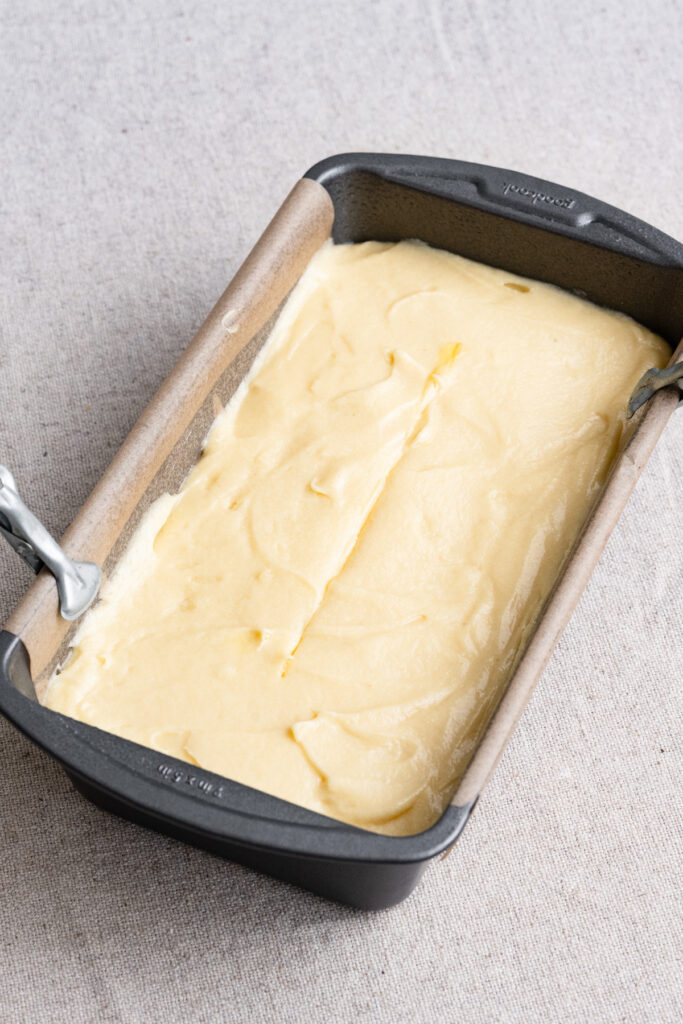
- Smooth the batter down into the pan with a spatula. One of my tricks for a picture perfect crack down the middle, is to dip a sharp knife in melted butter and draw a line in the middle of the cake. No need to go deeper than 1/8-inch.
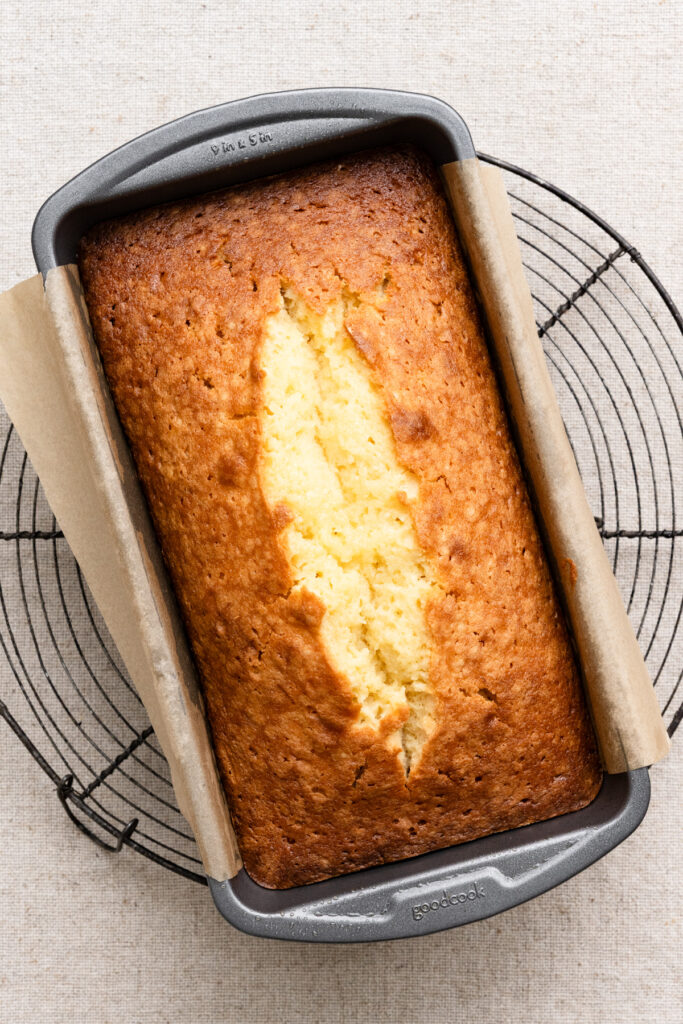
- Bake the pound cake until golden brown with a nice light crack down the center.
Jenn’s Tips for the Best Loaf
- Make sure everything is room temp! For a proper emulsion of eggs into creamed butter and sugar, plus the addition of buttermilk, room temp ingredients are a must!
- Level the cake batter: This is a thick batter, so it won’t pour or spread into an even layer on its own. To prevent having air tunnels in your cake, take a small spatula and push the batter down, then level off before baking.
- Bake at a low temperature: I’ve always baked my pound cakes at 325°F (160°C) for a nice golden crust with a tender center. When I tested this recipe at a slightly higher temp, the outer crust was a bit too thick and dark for my personal taste.
- Top with orange cake glaze: Once the cake has fully cooled, whip up a simple orange glaze and spoon it over the top. If you’re not a fan of orange, swap the juice and zest for another citrus like lemon or lime.
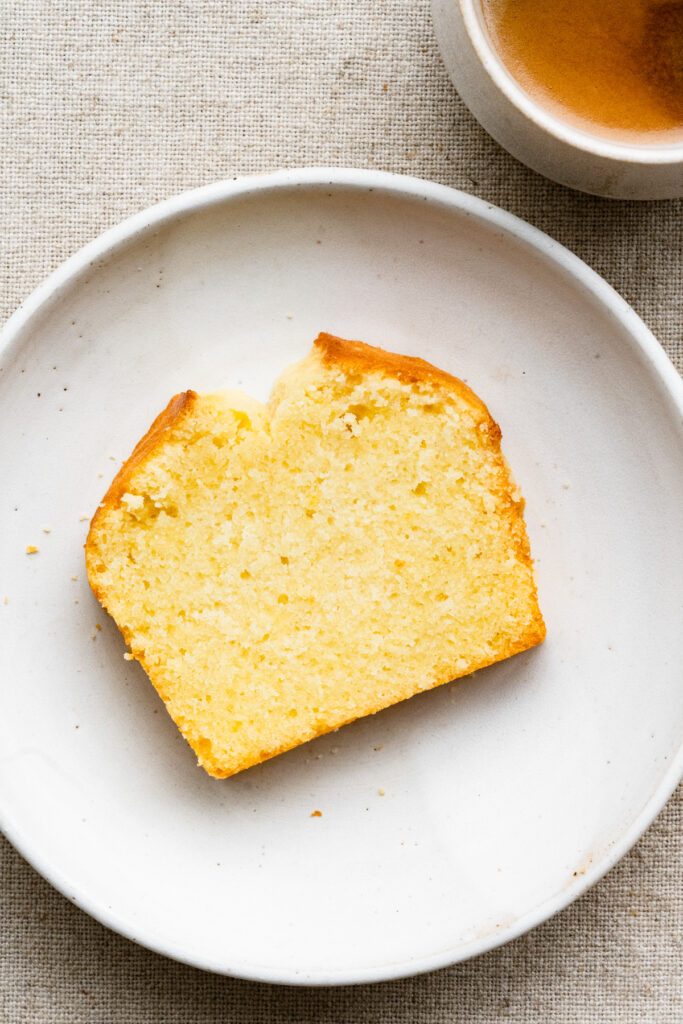
- Pound cake gets better with time: Once the cake has cooled and is sliced, the texture is light and fluffy. After a day or two, the crumb tightens a bit. The cake becomes slightly denser, with a deeper flavor. Some people say pound cake is best the next day. I usually can’t wait and always cut a slice while it’s still warm.
- Serve with whipped cream and fresh berries: For an elevated cake slice, dollop on a bit of whipped cream or sour cream and add some strawberries with a drizzle of honey.
How to Store & Freeze
- Room Temp: Store leftover pound cake in an airtight container at room temperature for up to 5 days. Or just cover it with aluminum foil and keep it on the counter like I do.
- Freeze: You can also wrap each slice individually with a couple layers of plastic wrap and freeze for later. Frozen pound cake slices will last up to 3 months.
★★★★★ Please leave a star rating and review below if you make this recipe! THANK YOU!!
Buttermilk Classic Pound Cake (loaf)
Equipment
- 9×5-inch metal loaf pan wider, medium height loaf
- 8.5×4.5-inch loaf pan taller loaf
Ingredients
- 2 teaspoons lemon zest
- 250 grams (1 ¼ cups) granulated sugar
- 250 grams (2 cups) cake flour, 8-9% protein, sifted (all purpose with 10.5-11% protein will work too)
- 1 teaspoon baking powder
- ½ teaspoon fine sea salt
- 227 grams (1 cup) unsalted butter (European style 82% butterfat), softened
- 150 grams (3 large) whole eggs
- 160 grams (⅔ cup) buttermilk, room temp
- 2 teaspoons vanilla bean paste or pure vanilla extract
Instructions
Make Lemon Sugar
- Place granulated sugar and lemon zest in a food processor and blitz a few spins until fine.250 grams granulated sugar, 2 teaspoons lemon zest
Pound Cake
- Preheat the oven to 325℉ (160℃), then grease a 9×5-inch (1.25 pound) loaf pan for a wider loaf or a 8.5×4.5-inch loaf pan for taller loaf. Line the pan with overhanging parchment paper.
- In a small bowl, whisk together the sifted flour, baking powder, and salt. Set aside.250 grams cake flour, 1 teaspoon baking powder, ½ teaspoon fine sea salt
- In the bowl of a stand mixer, fitted with paddle attachment on medium-high speed, cream together the softened butter and lemon sugar until light yellow and fluffy. This will take 3-4 minutes and I recommend scraping the bottom and sides of the bowl with a spatula a couple of times during. I use the number 6 speed on my stand mixer.227 grams unsalted butter (European style 82% butterfat), 250 grams granulated sugar, 2 teaspoons vanilla bean paste or pure vanilla extract
- Mix in each egg one at a time. Scraping the bowl in between eggs to make sure everything is blending evenly. The mixture should be yellow and fluffy.150 grams whole eggs
- Next, mix in one third of the flour mixture completely. Stir the vanilla into the buttermilk and mix in half of the buttermilk until combined. Mixing well between each, scraping the bowl as needed.160 grams buttermilk
- Blend in the second third of flour, followed by the second half of buttermilk. It may look slightly curdled, but will smooth out in the final step.
- Finally, mix in the remaining third of the flour mixture until just combined to make a thick smooth cake batter. Scrape that bowl again as needed. Don't leave anything stuck to the bottom.
- Spoon the cake batter into the prepared cake pan. Take a small spatula and level the cake batter while knocking out any air gaps.
- **For a picture-perfect crack down the middle, dip a sharp knife in melted butter and draw a line in the middle of the cake. Only cut about 1/8-inch deep. This is optional and only for aesthetics.
- Place the pan on the middle oven rack and bake for 75-85 minutes. Tent with a piece of aluminum foil at the 50 minute mark to prevent over-browning. To check for doneness, insert a toothpick into the middle. If it comes out with just a few moist crumbs and no wet batter, the cake is done.
- Place the pan on a wire rack to cool completely. To remove, pull up on the overhanging pieces of parchment paper and lift the cake from the pan.
Notes
- Ingredients Used & Substitutions:
- Flour: Swans Down Cake Flour 8% protein
- Swap evenly for Gold Medal all Purpose Flour 10.5-11% protein
- In France, use Farine T45 with 8.5% protein
- Butter: President Unsalted Butter 82% butterfat (European style cultured butter)
- Buttermilk: Swap for Greek yogurt or sour cream. This will result in a slightly denser, but still just as tasty, final texture.
- Flour: Swans Down Cake Flour 8% protein
- Oven: This recipe was written for a conventional oven (top and bottom heat). For convection fan ovens, reduce the temperature by 25 degrees and begin checking for doneness 75% of the way through baking.
See My Baking Ingredients & Conversions page for any questions about the ingredients used in this recipe.

Hello, I am so glad I found you on instagram while searching for a homemade pound cake recipe. I made two batches, one to enjoy right out of the oven while the other saved for another day. My husband, daughters and I absolutely loved it. So grateful to you for sharing it!
I live in a tiny island in the South Pacific, called American Samoa. The only poundcake I can find here are the frozen Sara Lee. When I visit families in the US, my favorite thing to do is try different pastries and doughnuts that are not available locally. My love of poundcake was recently discovered while visiting family, I was looking for a ready-made cornbread (a side for my homemade chili) at a Winco store – I was only left with their homemade pound cake, everyone loved it. Now we love eating my chili with pound cake so this will definitely be my go to recipe. Again, thank you for sharing your recipe with the world:)
Hi Ofa! Thank you so much for trying the recipe and sharing your feedback. It was a joy to read 🙂 Now I’m going to have pound cake the next time I make chili!
Great cake! Two comments “its a great cake to put on the counter and nibble on all week” – I have no idea how you can get this cake to last “all week” unless no one is home most of the time! Second – you list with berries, ice cream, etc as serving options. IF YOU HAVENT TRIED A SLICE IN THE TOASTER WITH JAM you are missing a life altering experience!
Haha! I think three days is as long as it’s lasted for me 🙂 I don’t have a toaster, but now I need to get one! Thanks for trying the recipe.
Please send me your buttery pound loaf recipe. It sounds delicious
Hi Marybeth, The recipe is just above the comment section on this page in the recipe card.
Could I put blueberries in this recipe?
Hi James, I recommend adding just 1 cup of blueberries, lightly tossed in flour. Fold them into the batter just before transferring to the pan. Let me know how it goes 🙂