
This post contains affiliate links. Please see our disclosure policy.
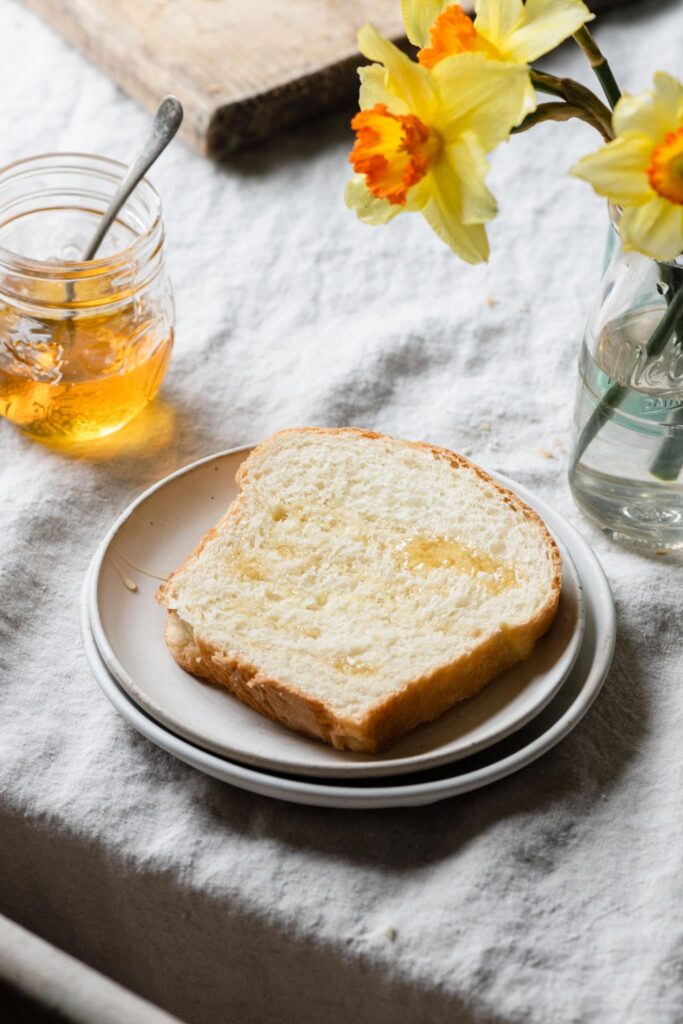
This soft, fluffy white loaf bread is the homemade version of the classic sandwich bread we all love. No starter or bread machine needed, just simple ingredients, a stand mixer, and a hint of honey for a touch of sweetness. Once you bake a batch, store-bought won’t stand a chance!

There’s something so comforting about the smell of freshly baked bread filling your kitchen, and this white sandwich bread brings all the warm, nostalgic vibes. I’ve been making this recipe for years, and it’s become a staple in my home. The loaves bake up soft and fluffy with the perfect golden crust, and they slice like a dream.
It’s the kind of bread that makes a tomato or peanut butter and jelly sandwich taste even better, elevates your morning toast, and is sturdy enough to hold up to a loaded deli sandwich. I love that it uses simple pantry ingredients and doesn’t require any fancy tools, just a trusty stand mixer (or even your hands in a pinch!). Once you make homemade bread like this, it’s hard to go back to store-bought.
Key Ingredients
- Active Dry Yeast: This is your leavening agent and what makes the bread rise. Be sure to bloom it in warm milk (around 110°F) to wake it up, if it doesn’t get foamy, your yeast may be expired.
- Honey: Adds just the right amount of sweetness and helps feed the yeast. It also contributes to a beautiful golden crust.
- Whole Milk: Adds richness and softness to the crumb. Using warm milk (not hot!) helps activate the yeast and brings a tender texture to the bread.
- All-Purpose Flour: Provides structure and softness. It gives the bread a fluffy, tender texture, perfect for sandwiches and toast.
- Bread Flour: Has more protein than all-purpose, which adds chew and a bit of extra strength to the dough. The blend of the two flours gives the best balance of soft and sturdy.
- Water: Hydrates the dough.
- Unsalted Butter: Adds moisture, flavor, and richness. It also helps with a soft crumb and a tender crust. Make sure it’s cooled after melting so it doesn’t kill the yeast.

Jenn’s Tips
- Mind the milk temperature. Use warm milk around 110°F to activate the yeast. Too hot, and you’ll risk killing the yeast. If you don’t have a thermometer, just dip your finger in, you’re looking for it to be slightly warm, not hot.
- Proofing matters. Those resting periods, called proofing, are key to light, airy bread. They allow time for the yeast to create air bubbles and develop structure.
- Use a warm environment. Cover the bowl (and later, the loaf pans) loosely with a tea towel and place them in your oven with just the light on. It creates the perfect warm environment for the dough to rise.
- Keep an eye on browning. Every oven is different, so check for a golden-brown crust toward the end of baking. If it’s looking pale, give it a little more time.
- How to check for doneness. If you’re unsure, insert a thermometer into the center—it should read about 190°F. Or carefully tap the bottom of the loaf for a hollow sound (though this can be tricky if the loaf is still warm and in the pan).
- Cool before slicing. Let the loaves cool in the pan on a wire rack for 10–15 minutes. Then, run a sharp knife around the edges and gently invert to release.
Ways to Serve
- Classic PB&J: Spread with peanut butter and your favorite jelly for an unbeatable nostalgic treat.
- Southern Tomato Sandwich: Coat two slices with your favorite mayonnaise and freshly cracked pepper, the sandwich together with thick slices of ripe tomatoes.
- Ultimate Grilled Cheese: Layer with melty cheese and toast until golden and crispy.
- Hearty Sandwiches: Use it to build deli sandwiches stacked with meats, cheeses, and fresh veggies.
- Breakfast Toast: Top with avocado, a sprinkle of salt, and chili flakes, or just butter and jam.
- French Toast: Dip slices in cinnamon-spiced egg batter and cook for a fluffy breakfast favorite.
- Croutons: Cube and toast for crunchy salad or soup toppings.
- Bread Pudding: Use leftover bread for a comforting, custardy dessert.
★★★★★ Please leave a star rating and review below if you make this recipe! THANK YOU!!
Homemade White Loaf Bread

Equipment
Ingredients
- 4.5 teaspoons active dry yeast, (2 packages of yeast)
- 4 tablespoons honey
- 240 grams (1 cup) whole milk, warm (110℉)
- 500 grams (4 cups) all purpose flour, 10-11.7% protein
- 250 grams (2 cups) bread flour, 12-13% protein
- 2 teaspoons kosher salt
- 240 grams (1 cup) water, room temperature
- 2 tablespoons unsalted butter, melted and cooled
Instructions
- In the bowl of a stand mixer, gently hand which together yeast, warm milk, and honey. Let sit for 10 minutes until frothy with bubbles.4.5 teaspoons active dry yeast, 4 tablespoons honey, 240 grams whole milk
- While yeast is activating, combine both flours and salt into a large bowl and hand whisk together.500 grams all purpose flour, 250 grams bread flour, 2 teaspoons kosher salt
- Add water and melted butter to the yeast mixture. Using the dough hook attachment begin mixing on medium speed.240 grams water, 2 tablespoons unsalted butter
- Slowly spoon flour mixture into liquid. Slowly increase the speed on mixer as the flour absorbs the liquid. If you turn the mixer all the way up to medium high at once, the four will kick out everywhere.
- Once flour is incorporated and a dough has started to form. Beat the dough on medium high for 3-4 minutes. The dough should pull away from the sides of the bowl but still be attached to hook and bottom of bowl.
- Dough should not be dry nor super sticky. It should feel tacky when tapped with a finger tip and just slightly stick to your skin.
- Transfer dough to a lightly floured bowl. Cover loosely with a tea towel and set in a warm place to double in size for one hour or longer if needed.
- Remove dough from bowl with hands onto a lightly floured surface. Dough should be very 'airy' and you will have to scrape from bowl with a scooped hand.
- Divide dough in half with a bench scraper or large sharp knife. I prefer to weigh out the dough for exact measurement.
- Prepare two loaf pans with a light mist of non-stick spray or line with parchment paper that hangs over the edges.
- Take each half of dough and roll out to a rectangle. The rectangle will be thick and no longer than the length of your loaf pans.
- Next, roll the rectangle long side inwardly like a jelly roll to form a log. Gently close the seems on the ends and place the long seam side down into the bottom of the pan.
- The dough will look like a little fat log laying in the center of each pan.
- Cover your loaf pans loosely with a tea towel and let rest again for a second prove. They should rise, double in size, and fill all the space of the pans.
- Once risen, remove towel and bake loaves.
- Preheat oven to 400℉ (200℃). Place loaves on middle to middle lowest rack in oven and bake for 25-30 minutes util tops are golden brown.
- Remove pans from oven and place on cooling rack for 10-15 minutes.
- Invert loaves from pan and slice!
Notes
- All Purpose Flour- King Arthur Flour, 11.7% protein
- Bread Flour- King Arthur Flour, 12.7% protein




I only have instant yeast due to quarantine limitations. Do I still need to proof the yeast?
I will be using only AP flour.
Thank you!
If you choose to use Instant Yeast, use 25% less than recipe calls for and don’t worry about proving the yeast, just add it in:) The texture will be a little softer with using only All Purpose Flour, but will work just fine.
I have instant yeast. But I don’t know if it’s still good. Can I proof it to be sure. Or does proofing instant yeast affect the yeast?
What type of bread from your recipes would you recommend for avocado toast?
Hi I’ve tried this recipe to make bread for sandwiches but the loaf isn’t rising any where near the amount yours is in the photos. I’ve done the recipe exactly and can’t understand why it isn’t rising in the loaf tin. The first prove works perfectly but once it’s in the loaf tin it only rises to the top of the tin. Do you have any advice please? Thank you!
Hi Abby, have you already baked the bread? It will rise more as it bakes. The second prove when its in the tin will puff and fill up the pan, then it will rise even more in the oven.
You also want to make sure its in a warm location If you’re house is cold it make take longer to rise.